
Illinois Waterways Initiative
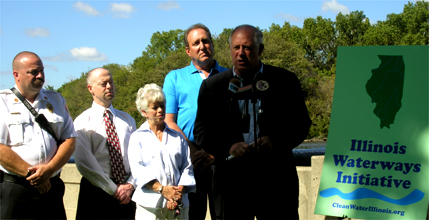
In the aftermath of devastating storms that sent rivers throughout Illinois flooding over their banks and left 10 counties disaster areas, Lt. Gov. Pat Quinn Thursday called for a $1 billion Illinois Waterways Initiative to control floods and make sure the water in our rivers, lakes � and kitchen faucets � is clean and safe.
�For too long, the state of Illinois has neglected the basic infrastructure that we all rely upon to control floods and reduce pollution,� Quinn said during a news conference at 10:30 a.m. Thursday on the banks of the Des Plaines River in suburban Lyons. �Last week, residents living in riverside communities throughout northern Illinois paid a heavy price for that neglect.�
Last week�s torrential rains overwhelmed the storm sewer system in the Chicago area, filling underground tunnels and reservoirs and forcing sanitation officials to pour raw and partially-treated sewage into the waters of Lake Michigan.
�To reduce pollution in our rivers and streams, to lessen the threat of floods that wreak economic disaster and endanger lives, and to ensure the safety of our drinking water, I am calling for passage of the Illinois Waterways Initiative � a billion-dollar investment in capital projects that will restore and protect our state�s water resources, for us and for future generations,� Quinn said.
As the Labor Day holiday weekend approaches, and hundreds of thousands of swimmers, boaters and fishermen plan their visits to Illinois� lakes and rivers, Quinn urged the Illinois General Assembly to take decisive action to keep the state�s waterways safe and clean for all.
�We need a capital budget that will invest a billion dollars over the next five years to protect public safety and preserve public health,� Quinn said. This wise investment will foster economic growth and sustain the natural legacy of our state�s great lakes and rivers.�
Under Quinn�s proposal, the Illinois Waterways Initiative would invest :
� $300 million in the Clean Drinking Water Initiative, a program offering grants and low-interest loans for drinking water infrastructure through the existing State Revolving Loan Fund (SRLF). These funds would be used to treat and transport clean, adequate water supplies to people living in older communities with crumbling water mains throughout Illinois.
� $150 million for the Illinois Flood Control Project, to reduce flooding in urban areas statewide.
� $150 million for the Waste Water Treatment Program, providing grants and loans through SRLF to upgrade and build sewage treatment plants, allowing them to meet new, tighter pollution standards that will improve water quality statewide.
� $100 million for the Nonpoint Source Pollution Control Program (Section 319), a multi-faceted grant program to reduce polluted stormwater runoff in rivers and streams throughout Illinois.
� $100 million for the Lake Michigan and Chicago River Initiative, aimed at protecting Lake Michigan water quality by addressing the Chicago area�s unique stormwater pollution needs.
� $70 million for the Dam Safety Initiative, which will remove or minimize the public safety risks posed by run-of-the-river dams throughout Illinois by removing the dams or restructuring them with by-pass channels and new rock or concrete facings to reduce dangerous currents.
� $50 million for the Illinois River Restoration Program to match federal dollars for projects along the Illinois River that will improve water quality and wildlife habitat while expanding recreation opportunities.
� $50 million for the Illinois Green Infrastructure Program, a new program providing grants to control stormwater runoff, reduce flooding, and improve water quality through such state-of-the-art practices as permeable pavement parking lots, green roofs, rain gardens and bio-swales.
� $20 million for the Illinois River Sediment Beneficial Re-use Program, funding new capital projects to dredge silt clogging the Illinois River, transport it and re-use the mud to provide topsoil cover in industrial brownfield redevelopment, landfills, and surface mine reclamation.
� $10 million for Illinois Water Supply Planning, a continuing study of the Mahomet and Northeastern Illinois deep bedrock aquifers to determine groundwater supply and demand.
�Under the Illinois Constitution, every person in the Land of Lincoln has the right to a healthful environment,� Quinn said. �We have a duty to make this investment in our precious water resources and to keep our state�s lakes and waterways clean and healthy for generations to come.�